
Currently Empty: ₹0.00

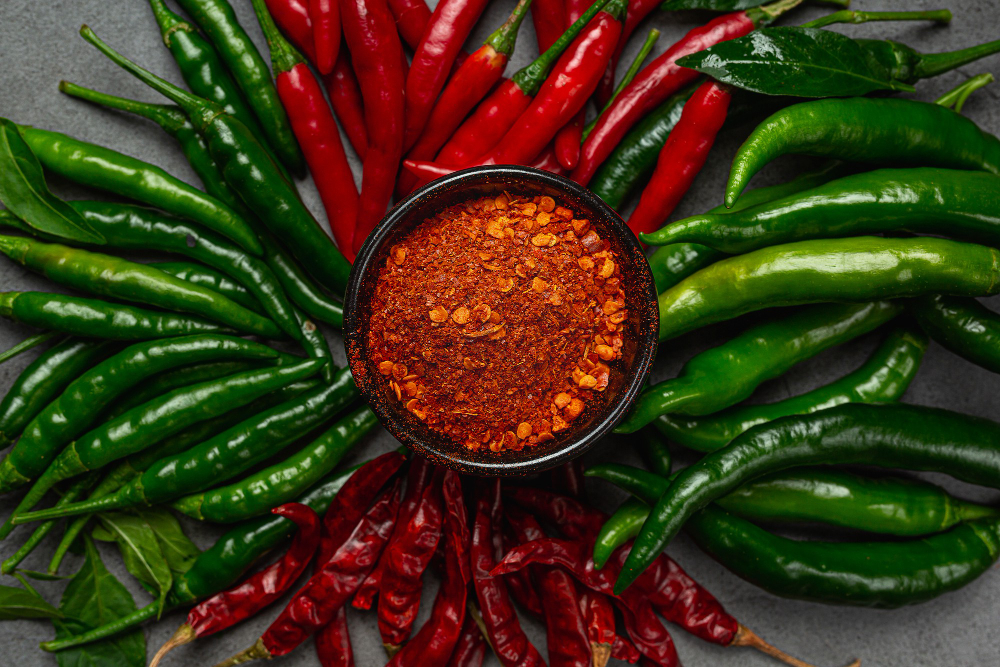
The Fiery World of Fermented Chilli Pickle in Northeast India
Some of the most interesting varieties of fermented chilli pickles in India come from Northeast India, particularly from the states of Manipur and Nagaland, and are made using traditional methods and local ingredients like Bhut Jolokia, along with traditional local methods of fermentation. These pickles vary from smoky and tangy to extremely spicy. |Each area has its own method of preparation, blends of spices, and ways of presenting its food.
Northeast India rarely gets talked about when Indian pickles are brought up. However, Northeast India has some of the oldest and most inventive pickle making techniques in India. Go to a market in Imphal or Kohima. You will see numerous glass jars full of chillies, bamboo shoots, and fermented vegetables. Each one represents a different region and a story of a people’s relationship with spice, preservation, and flavor.
Fermented chilli pickles are what create a region’s unique culinary identity. Fermented pickles from the Northeast use locally sourced, and naturally fermented ingredients blended with a few spices, and have a lot less oil than what is used in South and North Indian pickle varieties. Pickles from the Northeast are pungent, spicy, and truly unique.
Why Is There Such a Strong Pickle Tradition in Northeast India?
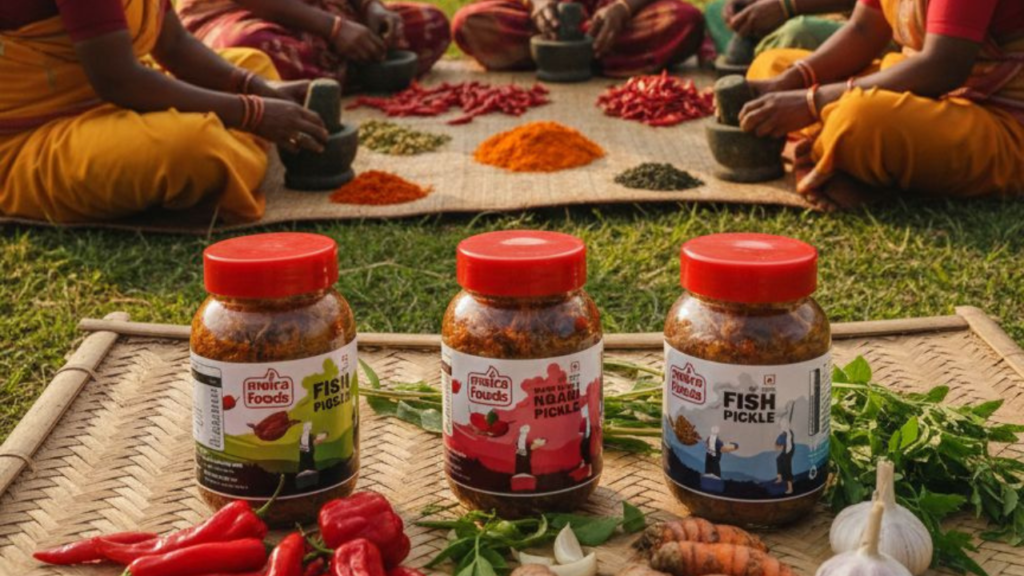
Northeast India’s geography and climate influence all aspects of life, including food. Fermentation occurred naturally through the cold, wet climate and hills of Northeast India before refrigeration was available. This greatly impacted how food was preserved in the region. Food such as vegetables, meat, and fish were cured by the natives of Manipur, Nagaland, Mizoram, and Meghalaya by the methods of fermentation, salting, and drying in the sun.
The soil and climate of Manipur and Nagaland support the growth of a great quantity of chilli. Because of this, many methods of preserving the crop and enhancing the flavor through fermentation and pickling were developed.
Different states of the region and different community regions of the states have their own variation and unique types of pickles. This is what makes the pickles of the Northeastern region so diverse and appealing.
What are Some of The Most Commonly Found Pickle Types in Northeast India?
While there are several regional styles, some pickles gain fame not just in the region but in the whole of India.
Fermented Chilli Pickle
This pickle is made by placing green or red chilli to naturally ferment and is made with little to no oil. The mix is typically salt, mustard seeds, and garlic. The fermentation process removes some of the raw spicy heat and adds a nice sour tang that pickled chilli without fermentation lacks.
This style of pickle adds depth of flavour without excessive spices, letting the natural flavours of the chilli shine. It is a Manipur meal staple commonly served with rice, dal, and grilled meat.
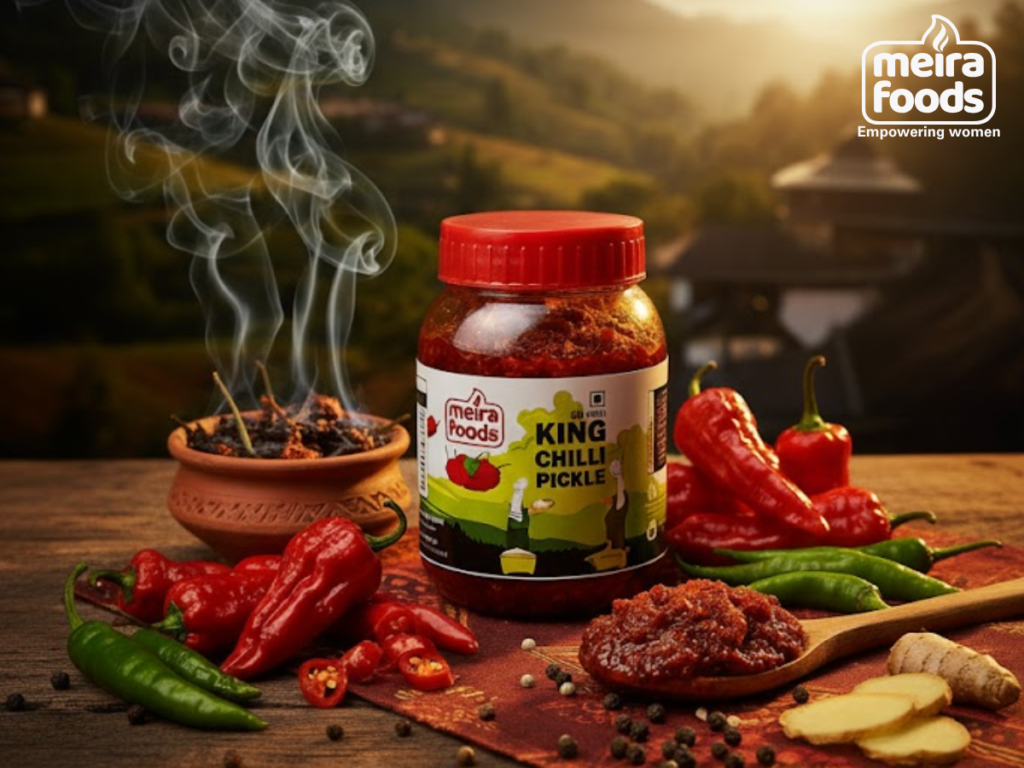
King Chilli Pickle (Naga King Chilli / Bhut Jolokia)
Once the record holder in the Guinness Book of World Records for the world’s hottest chilli, the Bhut Jolokia, or king chilli, is mainly cultivated in Nagaland, Manipur and Assam. It is one of the favourite ingredients for pickle making in the region.
King chilli pickle is incredibly hot, but has a smoky and fruity undertone. It’s used as a side condiment for other dishes because of its heat. Some makers of king chilli pickle let it ferment, while others keep it fresh by pickling it in mustard oil and spices.
Naga Chilli Pickle
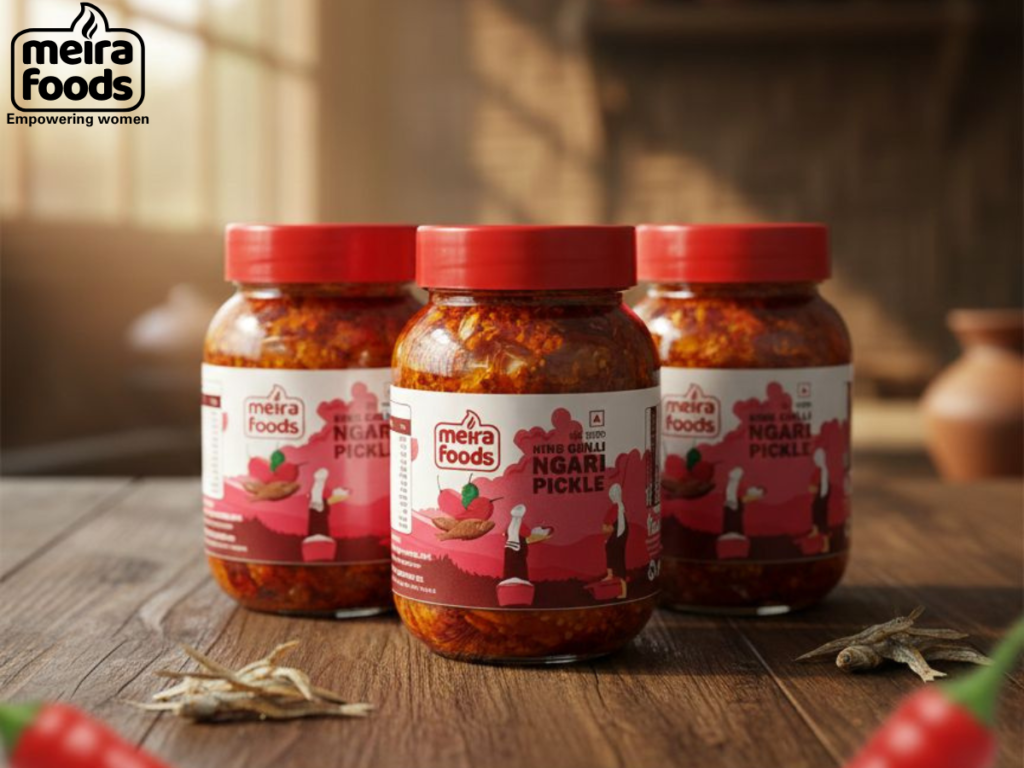
Although similar in preparation, Naga chilli pickle tends to be more complex in flavour. It incorporates other regional ingredients like fermented bamboo shoots, dried fish, or axone (fermented soybean) along with chillis. The combination results in heat from chilli, umami flavour from fermented soybean, and a slight funky flavour from bamboo shoots or fish.
Fermentation, and strong savoury flavours are hallmarks of Nagaland’s cooking, and Naga chilli pickle is a reflection of this.
Other Regional Varieties
Alongside Manipur and Nagaland, other Northeastern states have their own versions of chilli pickle. In Assam, a different aromatic profile is achieved by using panch phoron, a blend of five spices, and mustard oil in the preparation of chilli pickle. In Mizoram and Meghalaya, the chilli pickle is either spiced with local herbs, or sometimes even combined with fermented fish, making it have more of a sharp, savory edge.
Each of these, in their own way, demonstrates that the same ingredient (chilli) can take shapes and personalities that it might not otherwise, depending on the producing region’s local ingredients and methods.
What Makes These Pickles Truly One Of A Kind?
There are a couple of reasons why Northeastern chilli pickles stand out from pickles found in different regions of India.
One, a preference for fermentation over oil based preservation. Unlike other parts of India, where many traditional pickle recipes rely on oil to preserve and add flavour to the ingredients, Northeastern pickles rely more on natural fermentation for preserving pickle ingredients. The result is a much more complex and tangy flavour, compared to other pickles, with much less reliance on fat.
Two, a preference for local chillies. King Chilli and other similar regional varieties are unique to the Northeastern region, making their pickles nearly impossible to replicate with the commonly found chillies at a local supermarket.
Three, a preference for simplicity. Simplicity is the essence of traditional recipes in the region, as most don’t aim for numerous spice blends and rely on the combination of salt, mustard oil, and fermentation.
Cultural Relevance in Food Traditions Daily Meals. For much of Northeast India, chilli pickles are not peripheral condiments that are added once in a while. Daily meals are complemented with a wide selection of chilli pickles based on individual family and village traditions, which are preserved through the non-standardization of recipes
The fermented chilli pickle accommodates those who prefer to taste the heat gradually over the course of some time. On the other hand, for those who prefer spice to hit them immediately, the king chilli pickle is the way to go. This pickle has a substantially shorter shelf life.
These traditional pickle recipes are preserved by especially small-scale producers that procure chilli and other ingredients from local farmers. Meira Foods, a Manipur based food processor, is a good example of such a producer, who processes King chilli pickle and other Northeastern pickles using recipes of culinary heritage of the region. These producers maintain the tradition of the methodology of preparation for these recipes and products, while allowing a wider audience to appreciate them.
Best Enjoying and Serving Practices
There are some serving and enjoying practices that make Northeastern pickles distinct.
With steamed rice and dal. The simplicity of the meal consisting of steamed rice and dal is complemented with a small serving of fermented chilli pickle. The heat and tang of the pickle cuts through the flavour of the meal.
With grilled or smoked meat. The smoky and tangy notes of the pickles complement grilled/smoked poultry and fish which are predominant in the Northeastern cuisines.
Blended as a dipping sauce: King Chilli pickle can be mixed with tomatoes or fermented soy beans and used as a dipping sauce for momos and other snacks.
Used sparingly for zing: Due the intensity of both King Chilli and Naga Chilli pickles, they are mainly used as little secondary seasonings rather than to make up the main components of a dish.
As these pickles are very spicy, especially King Chilli pickles, you should perhaps try an easier variety like a fermented version first to get you accustomed to the extreme Nichiro style pickle flavors.
Bringing Northeast India’s Diverse Tradition of Pickles to Your Plate
Food preservation using fermentation is a central pillar to Northeast India’s food heritage as much as to the spices and ingredients. This can be appreciated through the different regional styles of fermented chilli pickles. From the depth and fermentation of Manipur’s fermented chilli pickle, to the intense flavor of King Chilli pickle, each pickle is a representation of one sub-region’s food heritage and is unique to its territory.
For those looking to experience these flavors, starting to buy pickles from artisanal makers may be a good first step. Not only do you get unique tastes, but you support farmers to continue their traditional horticulture and preserve these careers.