
Currently Empty: ₹0.00

The Different Types of Chilli Pickles Found in Northeast India
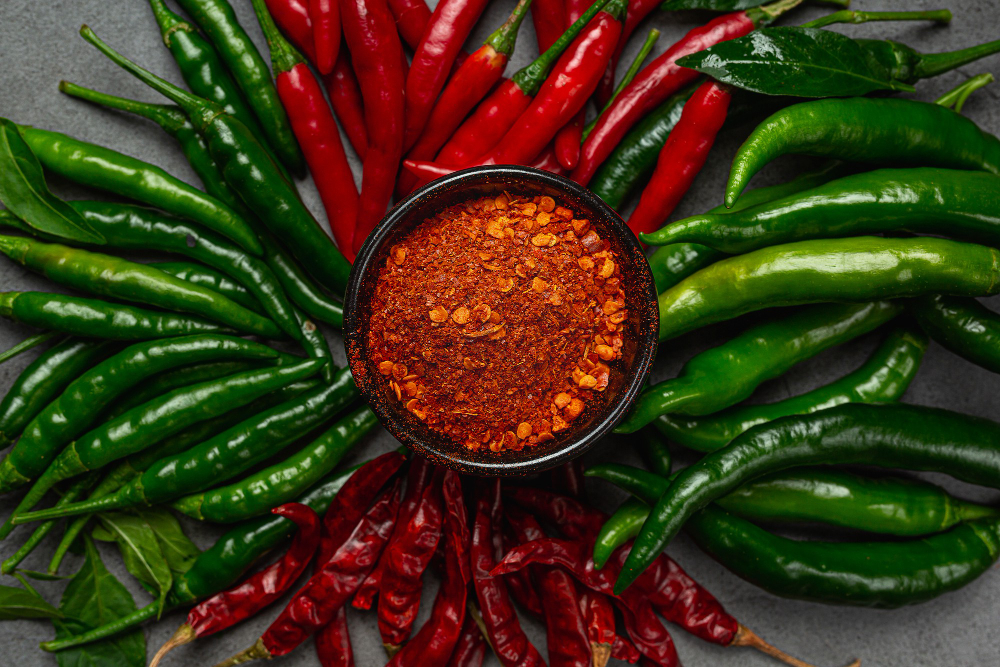
Northeast India exhibits a unique array of chilli pickles due to their regional traditions of fermentation and locally sourced ingredients. Manipur has a unique fermented chilli pickle recipe, manipur style, wherein naga chillies and mustard oil are used. Smoked or raw Bhut jolokia (king chillies) are used in chilli preparations in Nagaland and the other hill states. Each type is indicative of its particular state and climate, crops, and food traditions.
Northeast India is not one single cuisine. It is made up of eight separate states that each have their own relationship to chillies, fermentation and preservation. If you were to ask someone in Imphal what a ‘correct’ chilli pickle is, they would have a different reply than what you would hear in Kohima or Guwahati. For many generations, pickling has been a part of the culinary practices of the region, long before it began to be viewed as a form of culinary art.
The varied traditions of the region drawn together by the King Chilli, the bhut jolokia, which grows in Manipur, Nagaland and some regions of Assam, had for some time held the record as the world’s hottest chilli. The region’s pickle making has come to be dominated by this chilli.
This article aims to analyze the ways in which the Northeastern Indian states have developed approaches to chilli pickle making, the traits that each of these approaches has developed, and why food fermentation is so central to the Northeastern region’s food cultures.
Why are northeast Indian chilli pickles different from other Indian pickles?
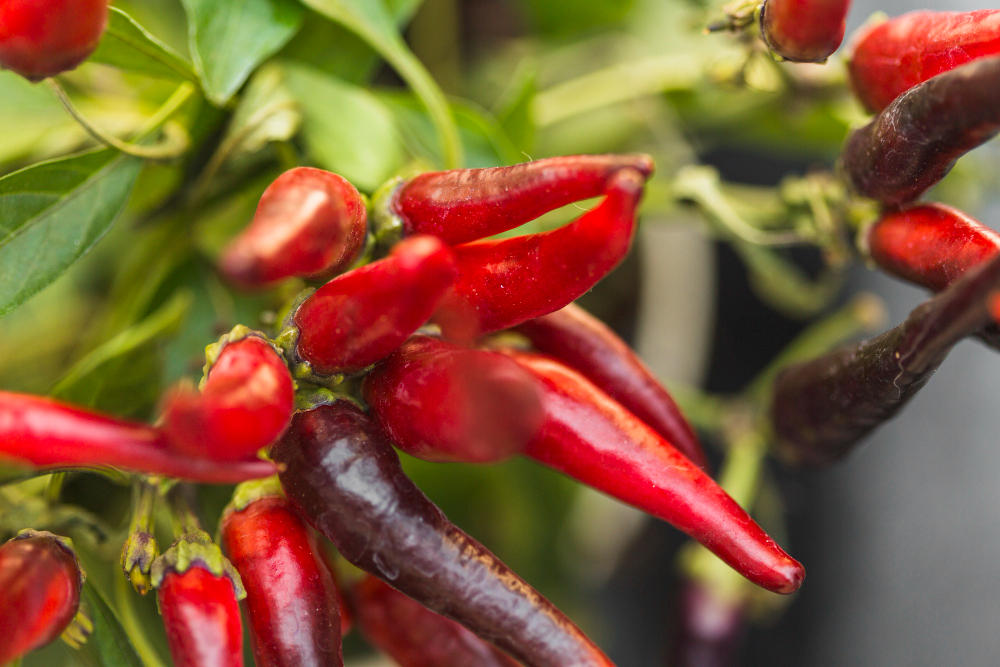
Generally, pickles from different regions of India, including the north and the west, use long sun-dried vegetable and fruits preserved in a generous amount of oil. Northeast India tends to have its own way with chilli pickles. The cool and wet climate in this region often makes it difficult to sun-dry food. Instead, most native communities rely on:
- Fermentation over oil-based preservation
- Minimal spice blends, letting the chilli’s natural heat and flavor lead
- Local souring agents like bamboo shoot juice or fermented soybean instead of vinegar
This is particularly the case with Manipur’s fermentation – evidenced by the fermentation of local fish to become ngari or soybeans to become hawaijar. A fermented chilli pickle from Manipur also naturally develops complexity and depth that a typical vinegar-based pickle would not have.
How is fermented chilli pickle made in Manipur?
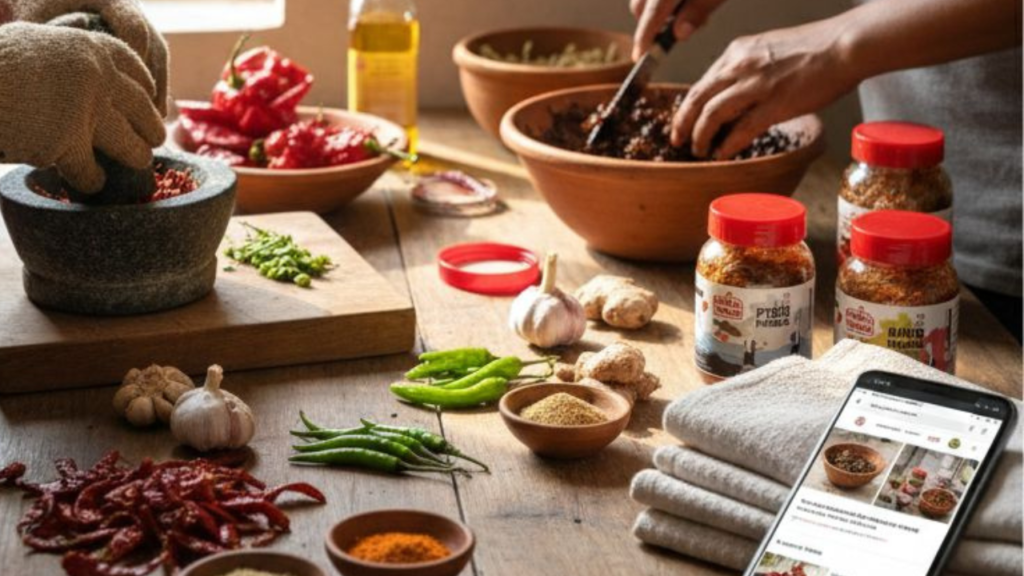
In the Manipur region, tradition requires the use of fresh or semi-dried chillies, and a combination of mustard oil, salt, and sometimes garlic, which is then left to ferment for several days or weeks. Chilli pickles undergo fermentation to decrease the raw chilli heat while increasing and prolonging the complexity of flavour.
Key characteristics of Manipuri-style fermented pickle
- Base chilli: Often naga chilli or bhut jolokia, depending on availability
- Fermentation time: Typically one to three weeks, though some households age it longer
- Flavor profile: Tangy, pungent, and deeply savory, with a heat that builds gradually
- Texture: Softer than raw pickles, due to the breakdown of cell walls during fermentation
One of the characteristic ingredients of all Manipuri-style pickles is naga or bhut jolokia. However, a lot of home cooks tend to allow the fermentation of the pickle to go on for longer and hence a lot of Manipuri-style pickles tend to be 1-3 weeks old. Post fermentation the pickles develop a complex savory flavor with a buildup of heat.
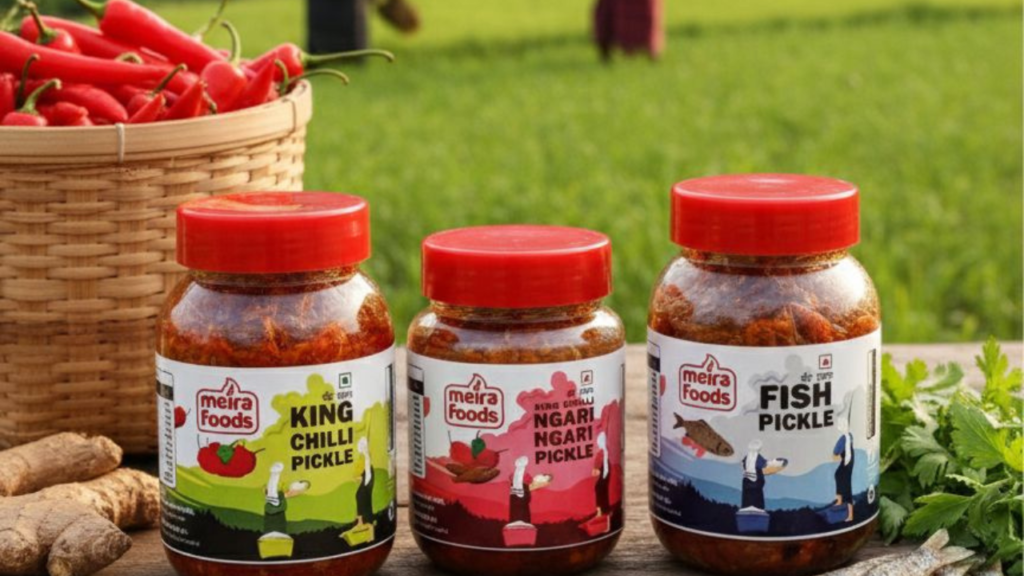
Meira Foods & other packaged brands try to replicate this long, slow process in their packaged versions.
Manipur, Nagaland, and parts of Assam have Bhut Jolokias, and King Chilli Pickles refer to pickles made with these. Bhut Jolokia is the hottest Indian chili, measuring above one million Scoville units.
Balance King Chilli Pickle manipur preparation with mustard oil, garlic, and sometimes local herbs, acts to modernize the preparation.
Why King Chilli Pickle isn’t for everyone
The intensity of King Chilli Pickle means not everyone can appreciate its heat. This said, I still think it can be appreciated by those with the following appetite:
Tolerance level for very spicy.
Wanting to add a small amount of a potent condiment, to a very mild food like plain boiled rice, most veggies, or lentils (called dal).
Home cooks that have an appreciation for and knowledge of the nuances for portioning Northeast Indian cuisine.
For those who would rather have a less intimidating introduction to the breadth of traditions in Northeast Indian pickling, still start with a fermented pickle of naga chilli using bhut jolokia as the base.
What about other Northeast States and Chilli pickling?
Manipur and Nagaland’s association with Bhut Jolokia offers some interesting alternatives to the rest of the N.E. Region as well.
Assam:
Somewhat similar to the pickling traditions of neighboring Bengal, the pickling practices and recipes of the Assamese region incorporate considerable amounts of Mustard seeds and Mustard oil, and emphasize raw, unfermented preparations meant to bring out the heat of the chilli.
Nagaland:
Naga food is characterized by heavily smoking and fermenting food. Pairing with fermented bamboo shoot for a sour and earthy counterpoint to Manipur pickling.
Sikkim and Arunachal Pradesh:
Here they like to use dal khursani chilli that has a citrus, tart flavor, not as commonly used in Manipur and Nagaland.
These regional variations offer fascinating alternatives not only within the N.E. Region, but also along the length and breadth of India.
Why does fermentation affect flavor and shelf life of pickles?
Fermentation not only preserves food, but actively changes food as well. During fermentation, lactic acid bacteria break down the sugars found in the chilli. Lactic acid is a natural preservative that also extends the shelf life of the chilli. Fermentation also brings out a unique umami and tangy flavor that lacks in pickles that are either raw or preserved in oil. It also helps to digest the food as some of the fibers break down during the process. This might be why fermented pickles from Manipur are said to have a more complex flavor than the other unfermented chilli pickles that are found around the rest of India.
Bringing it all together
Chilli pickles from Northeast India shouldn’t be thought of as a whole, rather as a collage of different cultures from the region. From Manipur’s fermentation to Nagaland’s smoking, each style of chilli pickles illustrates the different methods that stretch across the region, influenced by the food resources that are available.
For those worried about picking up some chilli pickles, a good first pick could be a fermented chilli pickle from Manipur. These types of pickles are great for introducing someone to the Manipuri style of balancing heat, fermentation and flavour. For beginners looking to learn more about this style of pickling, traditional fermentation method brands like Meira Foods could be good places to start.